Simplifying the path from search to appointment
Redesigning provider search and scheduling for a 14-hospital health system
Led a cross-functional redesign of find a doctor, aligning research, content, product, engineering, and clinical stakeholders to reduce friction and increase online scheduling.
My role
Lead UX Designer, Researcher
Teams
UX, Product, Content, Development, Clinical, Legal
Timeline
8 months. Launched Jan 2022.
The Challenge
How might we design a simple and intuitive experience for finding and scheduling care, so users can trust the information they find?
Goals
Reduce frustration: eliminate dead-ends and search confusion
Better filtering: insurance accepted, reviews, availability, preferences
Boost scheduling: increase self-service appointment bookings
Research & Insights
We gained a better understanding of the problem after conducting a competitive analysis, heuristic review, user journey mapping, and reading through customer feedback surveys.
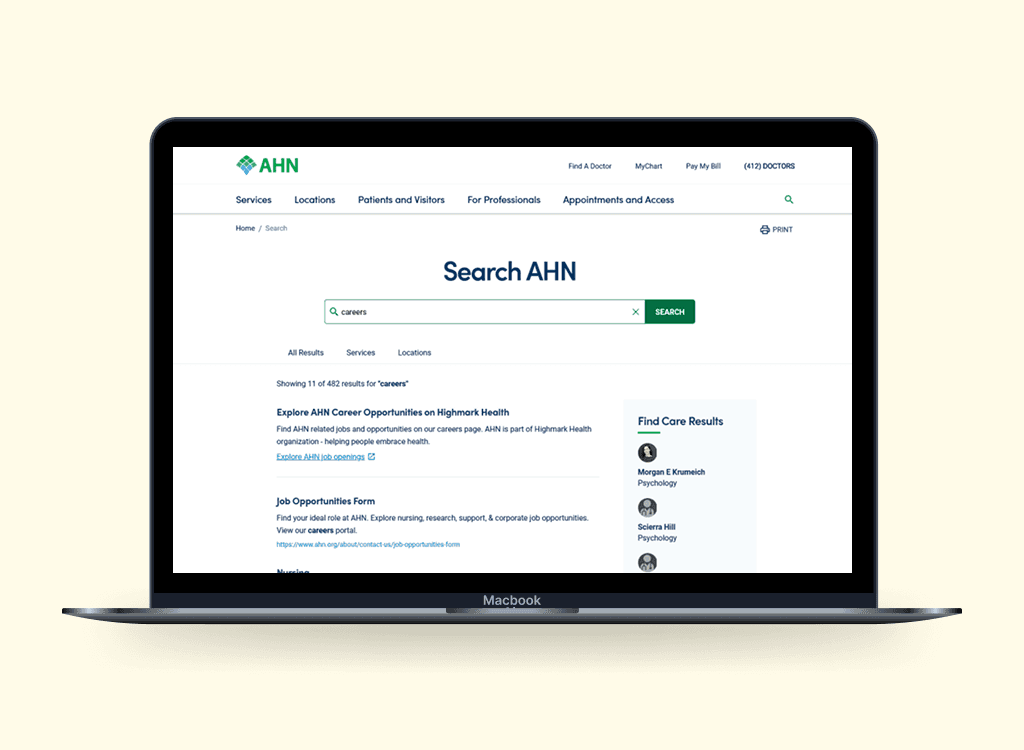
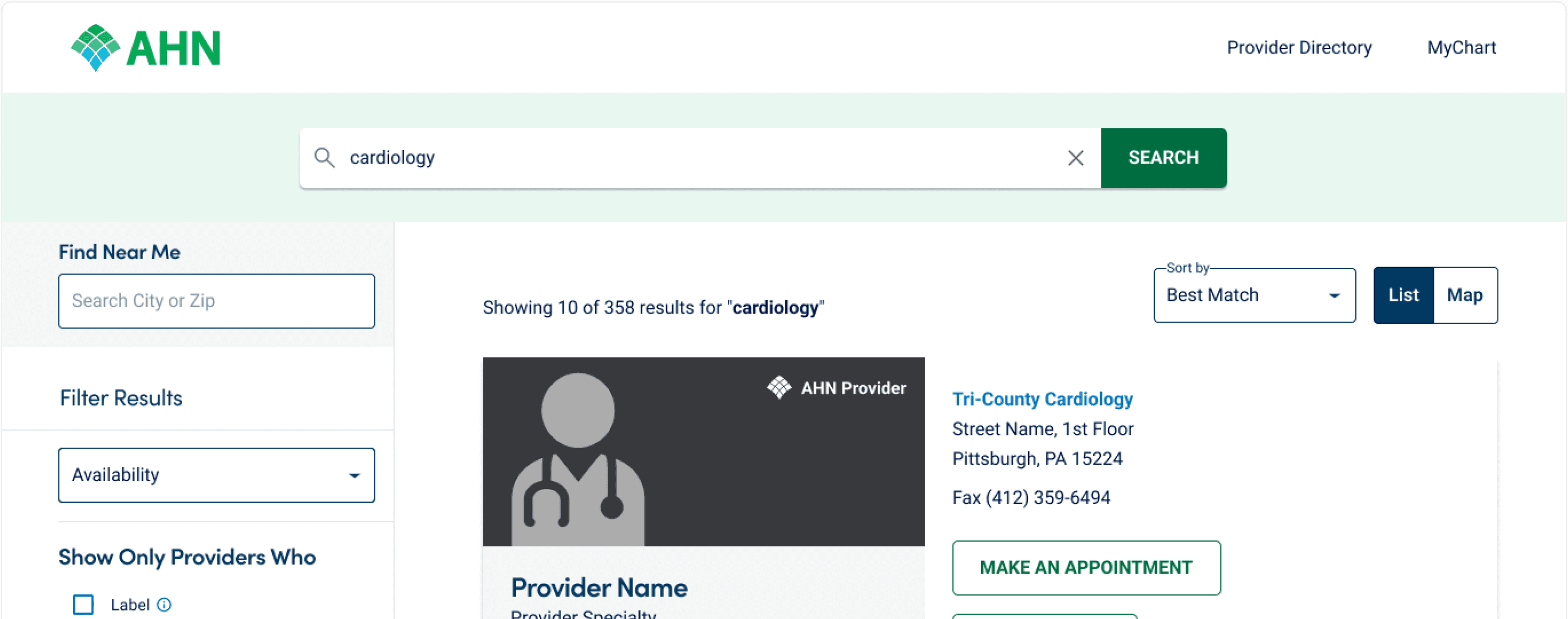
Broken search, fixed with smarter matching: Searching by doctor name failed unless users knew the exact spelling, fuzzy matching was completely absent. We addressed this by adding auto-suggest and fuzzy matching to search, which dramatically reduced unrelated results and abandoned searches.
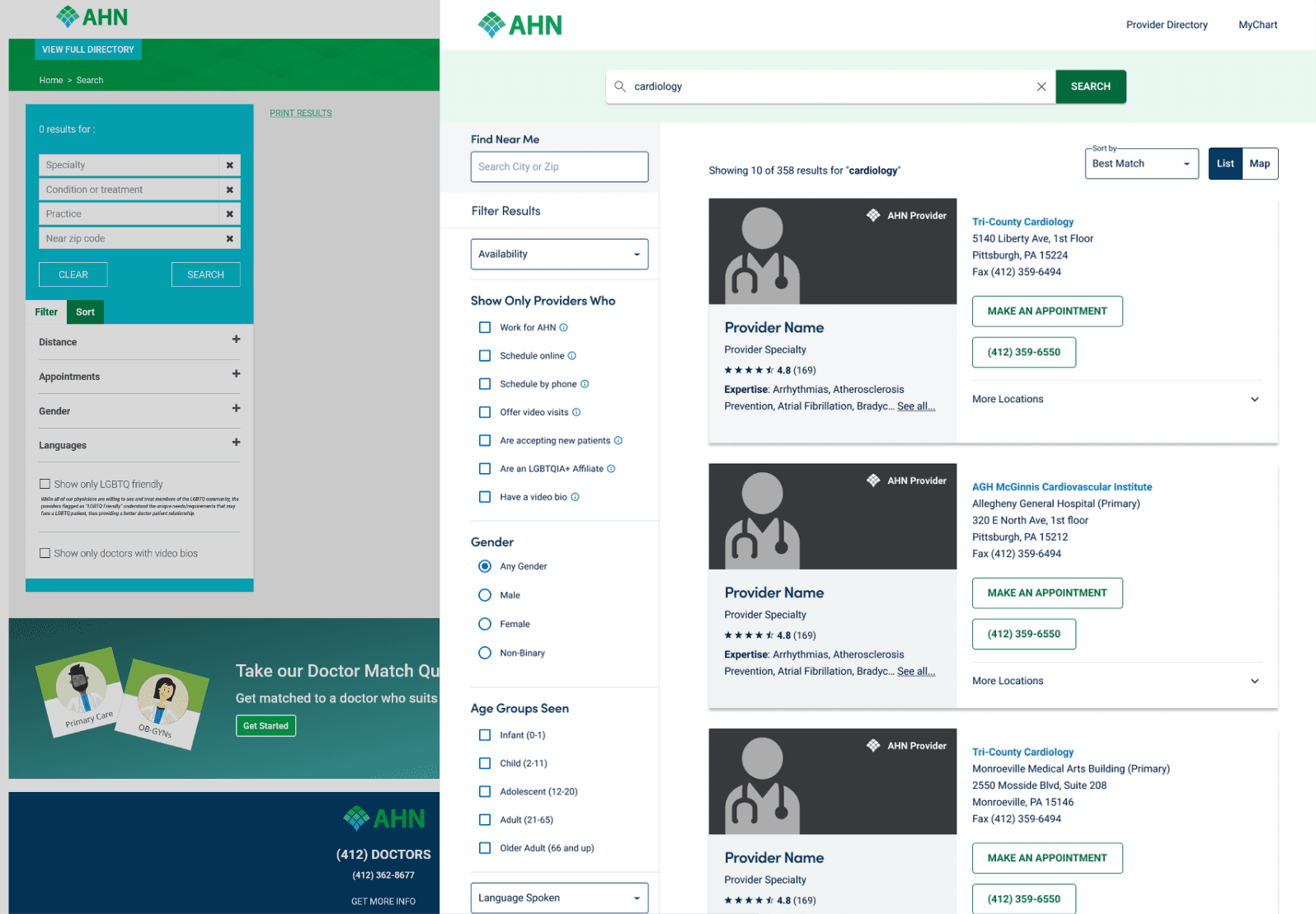
Missing filters, fixed by rethinking how users narrow results: There was no way to filter by insurance or review score, forcing users into manual comparison across providers. We added filters for insurance accepted, ages seen, and whether a provider was accepting new patients, directly reducing that manual burden.
Broken scheduling, fixed by closing a data sync gap: The appointment iFrame occasionally showed outdated time slots, the most critical task in the flow was unreliable, undermining trust right at the moment of conversion. I flagged this as a critical trust issue and we worked with the clinical team to fix the sync so time slots reflected accurate, current availability.
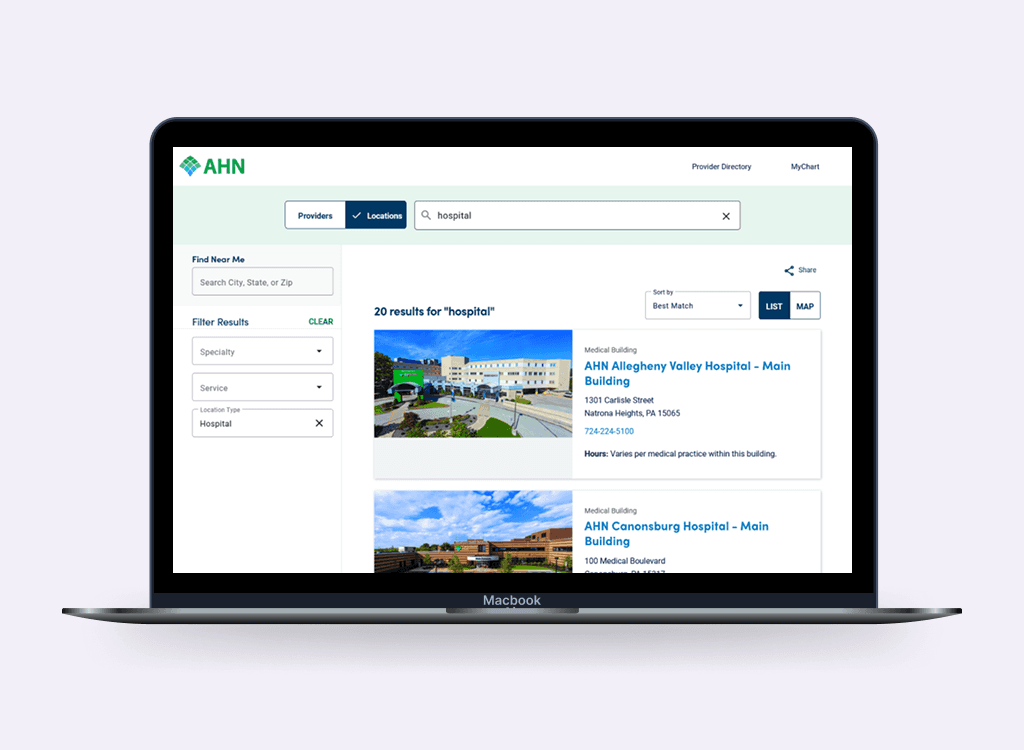
Two other findings shaped scope but didn't make it into this release, our competitive analysis showed that smart search with upfront scheduling calendars was common among competitors, and we found a significant location gap: no way to browse all providers at a single location, a mismatch with how users actually think about care (by clinic, not by name). Both became priorities for the next iteration.
Impact
Increased online scheduling: Drove a 10% lift in appointment conversion by surfacing availability upfront and reducing scheduling drop-offs.
Decreased dead-end searches: auto-suggest and fuzzy matching dramatically reduced unrelated results and abandoned searches
New filters: insurance accepted, ages seen, and accepting new patients filters will be added to search results
Takeaways & Next Steps
What we learned
Location search needs work: Location-based filtering was identified as a gap, a strong opportunity for the next iteration.
Back-end drives front-end UX: The most impactful UX win came from improving the search engine, not just the UI.
Cross-functional alignment is key: Clinical and Legal reviews added time but ensured trust and accuracy in provider data.
Accessibility audits change real decisions: An accessibility audit surfaced keyboard tabbing gaps across the flow, which we redesigned to meet WCAG 2.1 AA compliance.
What's next
Redesign location-based search and filtering
Add map view to search results page
Explore provider review display & rating system
A/B test CTA copy for online scheduling